

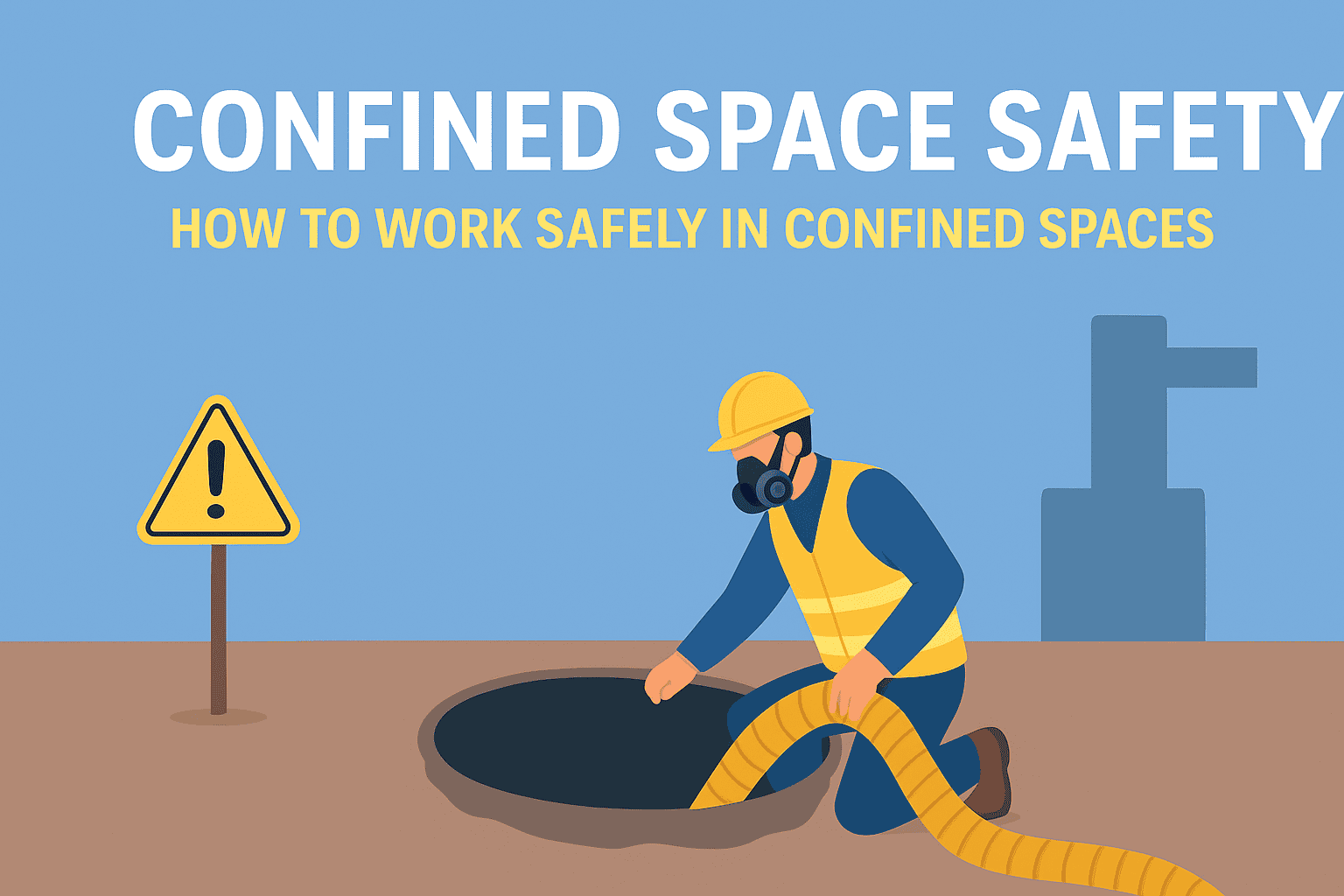
A confined space has three key characteristics:
- 1. Is large enough for an employee to enter and perform work.
- 2. Has limited or restricted means of entry or exit (e.g., a manhole, hatch, or narrow doorway).
- 3. Is not designed for continuous occupancy.
- Examples are crucial:
- Obvious: Storage tanks, silos, reaction vessels, sewers, manholes, boilers, utility vaults, pipelines.
Hazards
- A. Atmospheric Hazards (The Silent Killers):
- Oxygen Deficiency (<19.5%): Caused by rusting metal, fermentation, displacement by other gases (like nitrogen or argon), or combustion. Leads to dizziness, confusion, and rapid unconsciousness.
- Oxygen Enrichment (>23.5%): Often from leaking oxygen lines. Dramatically increases the risk of fire—materials that don’t normally burn can become highly flammable.
- Flammable Atmospheres (>10% of Lower Flammable Limit – LFL): Gases, vapors, or dusts from products stored in the tank (e.g., gasoline, solvents, grain dust).
- Toxic Atmospheres: Carbon Monoxide (from equipment), Hydrogen Sulfide (from decaying organic matter, smells like rotten eggs but quickly deadens your sense of smell), or chemical vapors from cleaning solvents.
B. Safety & Physical Hazards:
- Engulfment: The number one cause of confined space deaths. Walking on a seemingly solid surface of grain, sand, or liquid that can suddenly give way and swallow a person.
- Mechanical Hazards: Unexpected activation of mixers, augers, or conveyor belts inside the space.
- Electrical Hazards: Faulty wiring, exposed contacts in a damp environment.
- Temperature Extremes: Heat stress can set in much faster in an enclosed, non-ventilated area.
- Poor Visibility & Noise: Leading to trips, falls, and inability to communicate.
Control Mesaures
The gold standard is to follow the hierarchy of controls: first try to eliminate the need for entry, then control the hazards.
1. Elimination: Avoid Entry Entirely
- The most effective control measure. Can the work be done from the outside?
- Examples:
- Using cameras or sensors for internal inspection.
- Cleaning or unclogging from the outside with tools, brushes, or high-pressure hoses.
- Using remote-controlled robots for welding, cutting, or inspection.
2. Engineering Controls: Isolate and Ventilate
If entry is absolutely necessary, engineer the hazards out of the space.
- Lockout/Tagout (LOTO): This is non-negotiable. Physically isolate all energy sources.
- Electrical: Disconnect and lock out power switches.
- Mechanical: Isolate and lock out pipes with valves, or use physical blanks (blinding) to prevent material flow.
- Hydraulic/Pneumatic: Depressurize and lock out lines.
- Ventilation: Use mechanical ventilation (blower fans) to:
- Remove toxic or flammable gases/vapors.
- Provide a continuous supply of breathable air.
- Important: Never use pure oxygen for ventilation, as it greatly increases the risk of fire.
- Cleaning and Purging: Before entry, empty the space of any materials (sludge, slurry, product) and purge it with an inert gas (like nitrogen) or air to remove hazardous atmospheres.
3. Administrative Controls: The Permit and Procedure
These are the rules and processes that govern how work is done.
- The Confined Space Entry Permit: This is the central document. It must specify:
- The location and purpose of entry.
- Identified hazards and the time the permit is valid.
- All required safety measures (LOTO, ventilation, etc.).
- The names of the Entrant, Attendant (“Hole Watch”), and Entry Supervisor.
- Emergency rescue plan details.
- Air Monitoring and Testing:
- A calibrated, multi-gas meter must continuously test the atmosphere for:
- Oxygen Level (must be between 19.5% and 23.5%)
- Flammable Gases (must be below 10% of the Lower Flammable Limit – LFL)
- Toxic Gases (primarily Carbon Monoxide and Hydrogen Sulfide)
- Test the air at multiple levels (top, middle, bottom) as gases can stratify.
- A calibrated, multi-gas meter must continuously test the atmosphere for:
- Training: All personnel involved (Entrants, Attendants, Supervisors) must be trained on:
- Hazard recognition.
- Equipment use (ventilation, gas monitors, retrieval systems).
- Their specific roles and responsibilities.
- Communication procedures.
- Communication: Maintain constant communication between the Entrant and the Attendant (using voice, radio, or rope signals).
4. Personal Protective Equipment (PPE): The Last Line of Defense
PPE is used after all other controls are in place.
- Retrieval Equipment: A full-body harness with a retrieval line attached to a mechanical winch or tripod outside the space. The other end must be held by the attendant or a fixed anchor point.
- Respiratory Protection: Depending on the hazard, this could range from an air-purifying respirator to a Supplied-Air Respirator (SAR) or Self-Contained Breathing Apparatus (SCBA).
- Other PPE: Protective clothing, gloves, safety glasses, helmet, and safety shoes appropriate for the specific tasks and hazards (e.g., chemical suits, welding gear).
The Critical Role of the Attendant (“Hole Watch”)
The attendant is arguably the most important safety role and has one primary rule: NEVER ENTER THE SPACE FOR A RESCUE.
Their duties are:
- Maintain constant count and awareness of who is in the space.
- Monitor conditions inside and outside the space.
- Maintain communication with entrants.
- Order an evacuation if a hazard is detected.
- Summon the emergency rescue team immediately if something goes wrong.
- Prevent unauthorized entry.
Emergency and Rescue Planning
A rescue plan must be in place before entry begins. Key elements:
- Rescue Team: On-site trained team or pre-arranged emergency services. How long will it take them to arrive?
- Equipment: Ensure rescue equipment (SCBA, retrieval system, first aid) is available and functional at the entry point.
- Practice: Drills should be conducted regularly.
Summary Checklist for Safe Entry:
- Can we avoid entry? (Eliminate)
- Issue a Permit that details all hazards and controls.
- Isolate all energy sources (Lockout/Tagout).
- Test and continuously monitor the air.
- Ventilate the space.
- Set up retrieval equipment (harness, tripod, winch).
- Assign and position the Attendant.
- Confirm emergency rescue is on standby.
- Maintain constant communication.
- Exit and close the permit when work is done.
By following this structured approach, the significant risks of confined spaces can be effectively managed.
New chat


SEC Interview Preparation - hseraj
[…] Confined Space – hseraj […]